Theo Günther · 23 November 2026
Scheduled Safety Exercises Coordinate with Upcoming Library Openings Across Ridge Neighborhoods
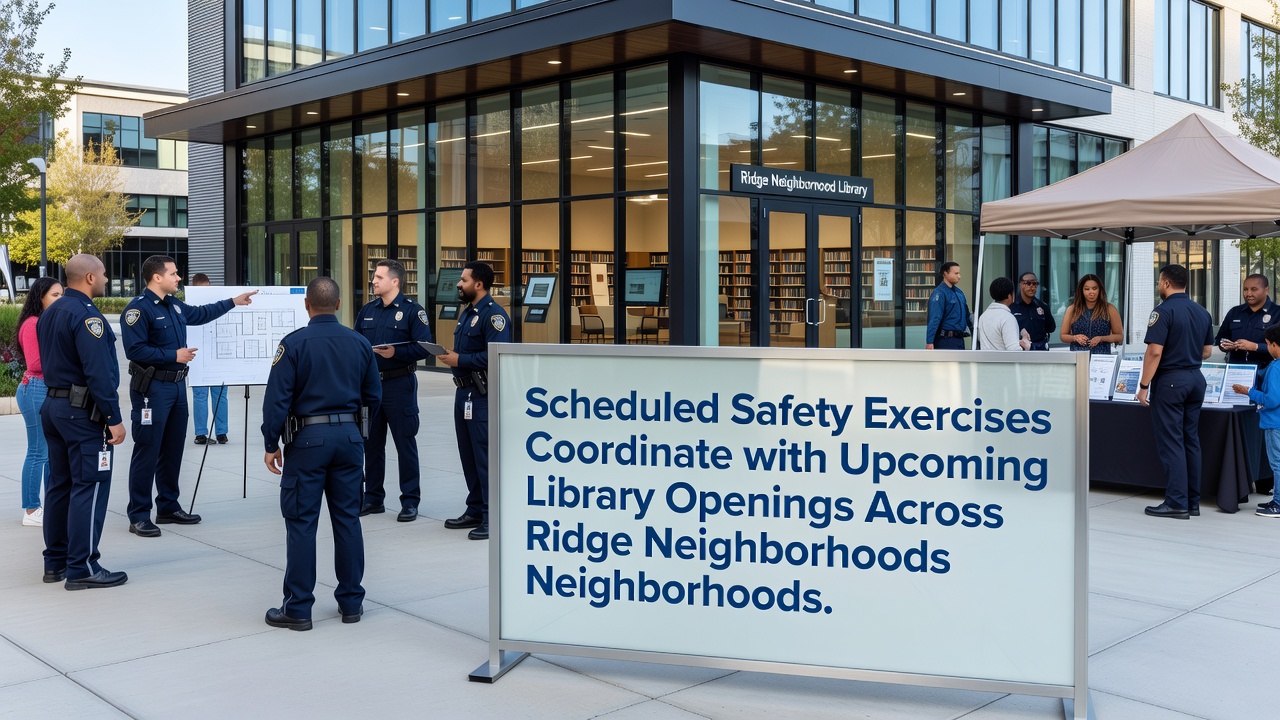
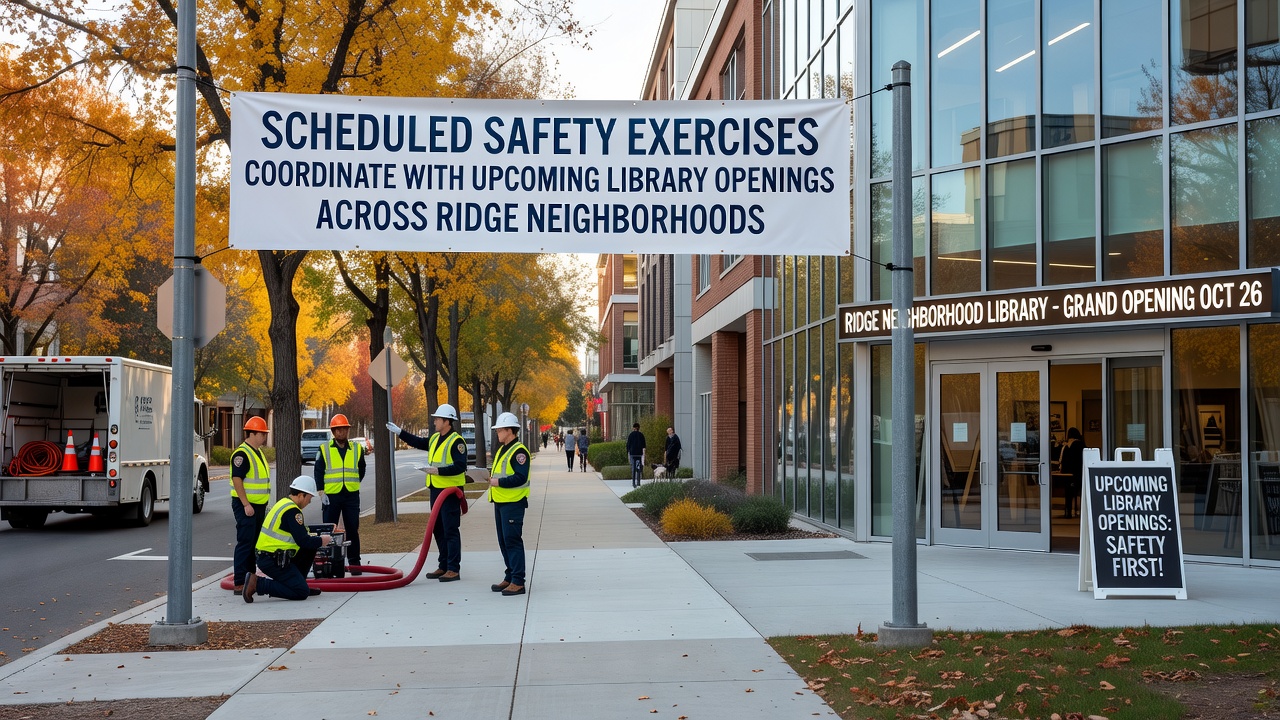
Local authorities in the Ridge neighborhoods have aligned scheduled safety exercises with the phased openings of several new library branches, creating integrated timelines that allow community facilities to support both educational access and emergency preparedness activities. Data from municipal planning records shows these exercises involve multi-agency drills focused on evacuation routes, communication protocols, and resource distribution, all timed to coincide with library construction milestones through late 2026.
Coordination Timeline and Key Locations
Planners have mapped out specific dates where safety drills overlap with library soft openings, such as the East Ridge branch set to welcome visitors in October 2026 while a neighborhood-wide evacuation simulation runs concurrently, and the North Valley site preparing for its November 2026 debut alongside a tabletop exercise on supply chain continuity during regional disruptions. Observers note that this approach leverages the libraries' central positions and extended operating hours to serve as temporary command posts, with studies from similar municipal projects indicating improved response times when public buildings double as coordination hubs.
Construction updates reveal three additional branches under development, each incorporating reinforced structures and backup power systems that meet updated safety standards, while existing branches receive retrofits to accommodate larger gatherings during drills. Figures from the Ridge Neighborhood Development Office indicate over 12,000 residents across four districts will gain direct access to these resources by the end of the year, with coordination meetings between library staff and emergency teams occurring monthly since early 2025.
Role of Safety Exercises in Community Planning
Safety exercises emphasize practical scenarios including fire response, flood mitigation, and public health alerts, drawing on data collected from previous regional events to refine participant roles and equipment deployment. Researchers at regional universities have documented how pairing these drills with library openings increases public participation rates, since new facilities often host orientation sessions that double as drill briefings. One case involved a 2025 pilot where library staff trained alongside first responders, resulting in streamlined information dissemination through digital catalogs and in-person workshops.
Equipment allocations include portable generators and satellite communication devices installed at each site, supported by funding streams from state infrastructure grants that prioritize multi-use public spaces. Those who've reviewed the operational plans note the integration reduces redundant training sessions, allowing agencies to test real-world logistics in buildings already designed for high foot traffic once libraries fully activate.
Community Impact and Resource Allocation
Residents in affected neighborhoods receive advance notifications through mailed guides and digital alerts, detailing how library openings will feature dedicated zones for safety information displays and volunteer registration. According to reports from the Federal Emergency Management Agency, coordinated facility use in comparable regions has led to measurable gains in household preparedness metrics, with surveys showing higher compliance when drills occur in familiar public venues like libraries. The November 2026 schedule incorporates a large-scale simulation across the Ridge valleys, timed with the Valley Mill branch launch to evaluate crowd management and child safety protocols during peak community hours.
Additional partnerships extend to local schools, where joint programs teach students about both reading initiatives and basic emergency procedures, building on curricula developed through collaborations with international library networks. Data compiled by the Canadian Urban Libraries Council highlights parallel efforts in other countries where public buildings support resilience training, offering benchmarks for Ridge planners to adapt based on population density and geographic features.
Future Phases and Monitoring
Subsequent phases will track performance indicators such as drill completion rates and library usage statistics post-opening, with adjustments made through quarterly reviews involving input from neighborhood associations. Evidence from ongoing projects suggests these alignments help distribute resources more evenly, particularly in areas where new libraries replace older structures lacking modern safety features. Observers have pointed to reduced overlap conflicts in scheduling as a direct outcome of the integrated planning model adopted here.
Conclusion
Overall the coordination between safety exercises and library openings establishes a framework that supports both immediate community needs and longer-term resilience goals across Ridge neighborhoods, with timelines extending into November 2026 and beyond. Monitoring continues through established municipal channels to ensure alignment with evolving standards and resident feedback.