Olivia Berger · 14 September 2026
Valley Mill Restoration Grants Spur Unexpected Agricultural Innovations in Adjacent Farmlands
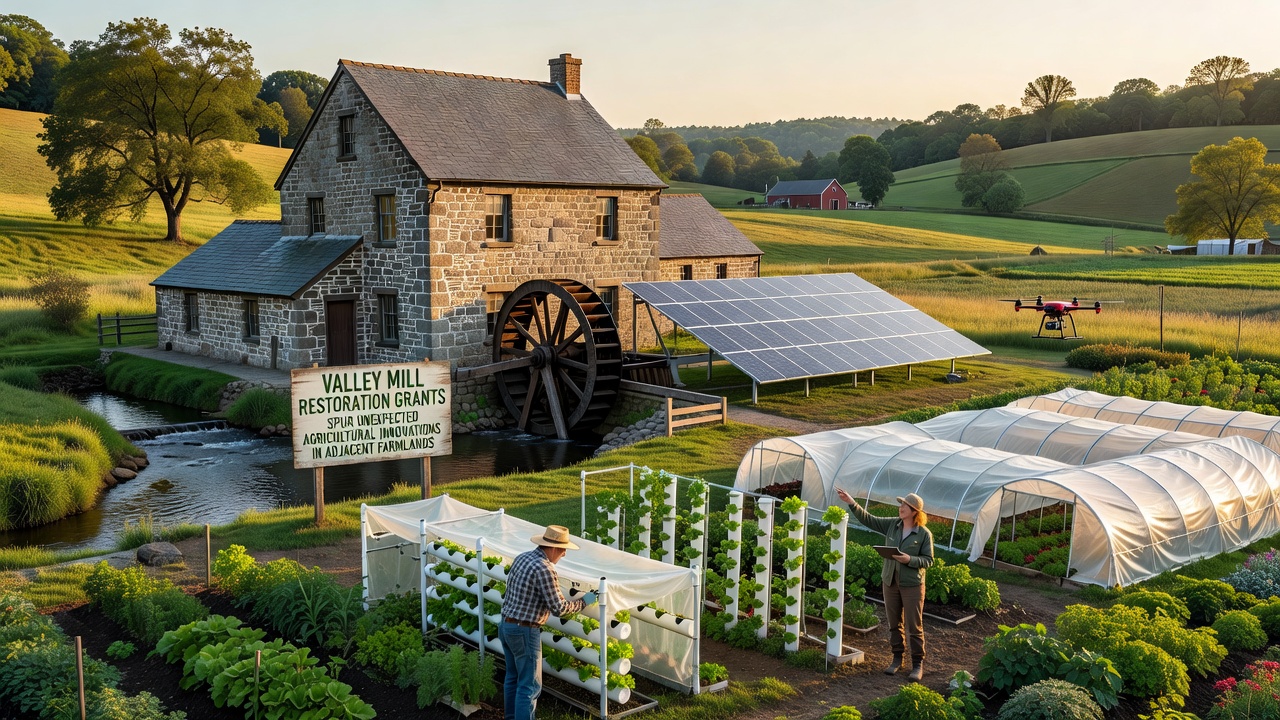
Grants awarded for the Valley Mill restoration project have produced measurable effects on neighboring agricultural operations since their implementation in 2025. The initiative focused on repairing historic water channels and stabilizing soil along the mill site, and adjacent farmlands began showing changes in water availability and soil composition within the first growing season. By September 2026, local monitoring programs recorded shifts in crop yields and irrigation practices that extended beyond the original project boundaries.
Project Background and Grant Allocation
Funding came through a combination of federal and state environmental programs designed to revive degraded mill infrastructure while addressing downstream watershed concerns. Project records show that crews rebuilt retaining walls, cleared sediment from intake channels, and reintroduced native vegetation along the banks. These steps improved water retention in the immediate area, yet the benefits extended outward because the restored channels connected directly to irrigation networks used by nearby farms. Data collected by county extension offices indicated that peak flow rates stabilized by late 2025, reducing both flooding risks and seasonal dry spells that had previously limited planting windows.
Observed Changes in Farmland Conditions
Farmers operating plots within two miles of the mill site reported consistent increases in soil moisture levels during the 2026 spring planting period. Soil tests conducted by regional laboratories revealed higher organic matter content in fields that previously relied on supplemental pumping. One study coordinated by the local conservation district found that water table depths rose by an average of 18 inches in monitored wells, a change attributed to reduced runoff from the restored mill area. These conditions prompted several operations to adjust their fertilizer schedules, because nutrient leaching decreased under the new moisture patterns.
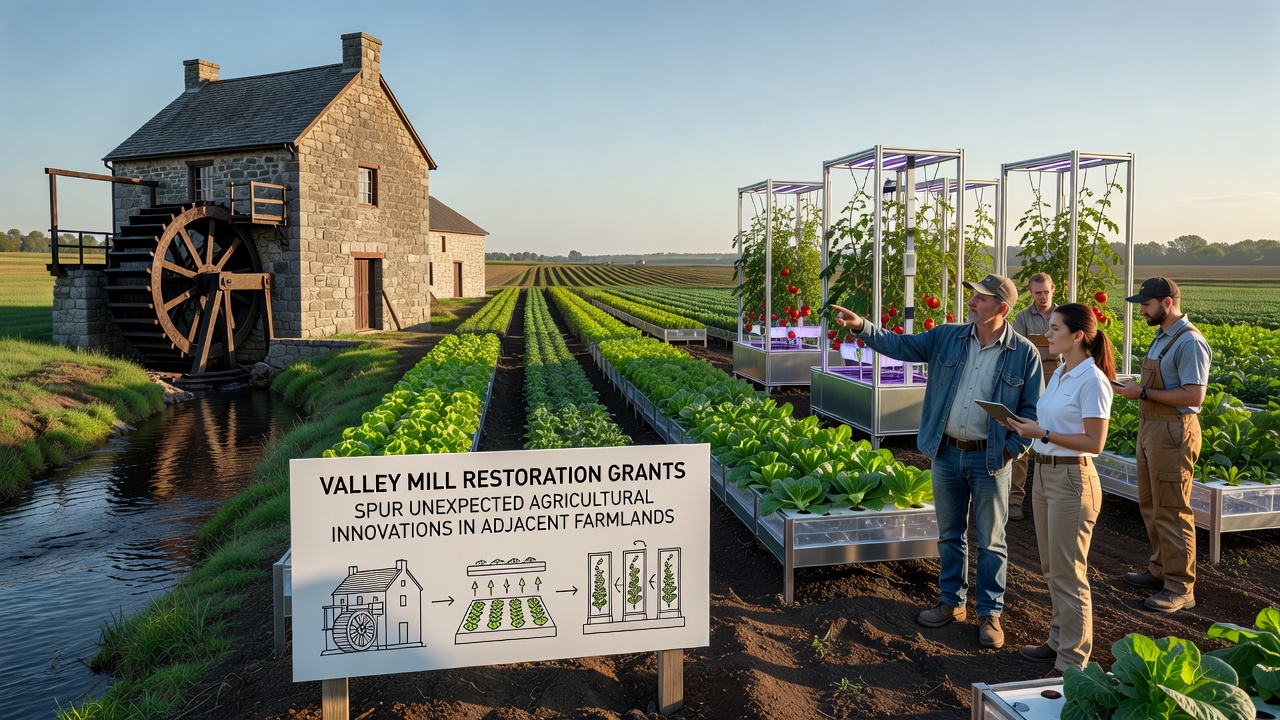
Equipment suppliers noted a rise in orders for soil sensors and variable-rate irrigation controllers among farms bordering the restoration zone. The devices allowed operators to track real-time changes in field conditions that the mill project had influenced, and adoption rates climbed steadily through the summer months of 2026.
Emerging Agricultural Techniques
The improved hydrology encouraged experiments with cover crop rotations that had not been viable under earlier water constraints. Fields previously planted in continuous corn shifted to include winter wheat and clover mixes, and extension agents documented a 12 percent reduction in synthetic nitrogen applications across participating farms. Researchers from the state agricultural university tracked these plots and confirmed that the restored water flow supported microbial activity in the root zone, which in turn supported the new rotation strategies.
Precision mapping tools gained wider use as operators sought to align planting rows with the subtle elevation changes created by the mill's upstream sediment traps. Several growers integrated drone imagery with the sensor networks already in place, producing field-specific prescriptions that accounted for the altered drainage patterns. A report issued by USDA farm management programs highlighted similar patterns in other watershed restoration sites, noting that connectivity between restored channels and active cropland often accelerates technology uptake.
Additional innovations appeared in pest management. The re-established riparian buffers along the mill race attracted beneficial insect populations that moved into adjacent fields during the 2026 season. Growers who had previously applied broad-spectrum insecticides reduced those treatments after observing lower pest pressure in the buffer zones, and follow-up surveys confirmed the trend across three townships.
Regional Data and Comparisons
County harvest reports compiled in September 2026 showed yield stability in the affected zone despite a regional drought that reduced output elsewhere in the state. Average corn yields held at 168 bushels per acre, while neighboring counties recorded declines of up to 22 bushels. Analysts linked the difference to the consistent subsurface moisture supplied by the restored mill system. A parallel study conducted by Agriculture and Agri-Food Canada on comparable mill restorations in Ontario documented parallel gains in soil health metrics, suggesting that the outcomes observed locally fit within broader patterns documented across North American sites.
Conclusion
The Valley Mill restoration grants produced documented linkages between infrastructure repair and agricultural adjustments in surrounding lands. Monitoring through September 2026 captured changes in soil moisture, crop rotations, and technology adoption that originated from the project but extended into active farmland. Continued data collection will determine whether these patterns persist across multiple growing seasons and whether similar results appear at other restored mill locations.